
How to Search Menominee County Traffic Court Records
Most Menominee County traffic cases are civil infractions handled by the 95A District Court, so the quickest confirmation comes straight from the citation the officer issued. Statewide, the MiCOURT case search brings participating Michigan trial courts together, which means a name or case number can surface a district court traffic file online. Public case information such as the violation, hearing activity, and disposition may appear there, though Michigan court rules keep the underlying document images off the internet, so anything beyond the case summary is requested through the court.
Before starting, gather the citation number, the driver's full name and date of birth, and the county payment location code if a balance will be paid online. Having each of these ready lets a search move from lookup to payment or a hearing request without a second trip. The court's civil infraction citation page explains the response deadlines and options in one place, so it is a useful reference alongside any search. A direct look at the 95A District Court civil infraction page shows how the court frames a traffic ticket from the day it is issued.
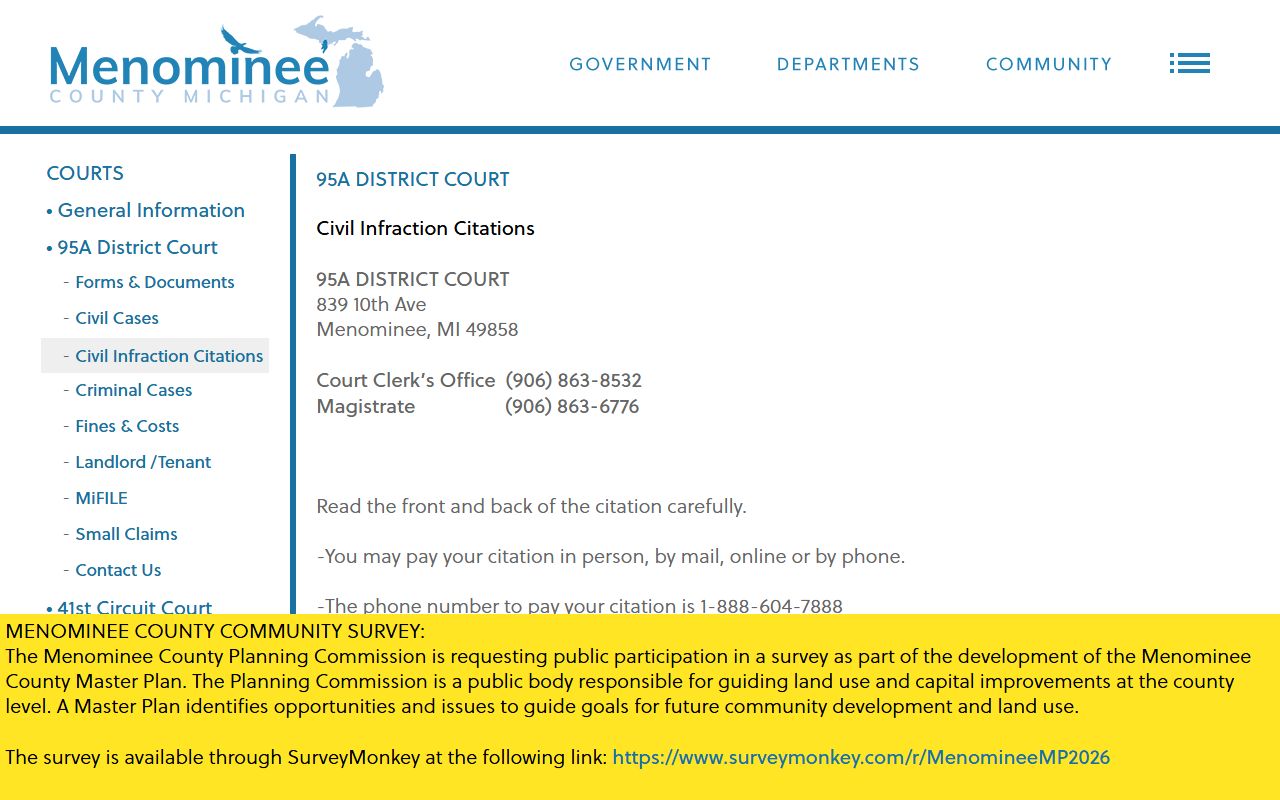
Reading that page first helps a driver understand the clock on a citation before running a Menominee County traffic court records search, since the deadlines shape every later choice.
- Open the MiCOURT case search or the county citation payment portal.
- Enter the citation number, or search by the driver's name and date of birth.
- Confirm the result is a 95A District Court traffic case and not a similarly named record.
- Review the violation, any scheduled hearing, and the amount of fines and costs.
- Pay the balance, request a hearing, or contact the clerk for a certified copy.
Which Court Handles Traffic Tickets in Menominee County
Traffic tickets and most civil infractions in the county are heard by the 95A District Court at 839 10th Avenue, Menominee, MI 49858. The Clerk's Office answers citation and payment questions at (906) 863-8532, and the court magistrate can be reached at (906) 863-6776. Beyond traffic, the district court has jurisdiction over misdemeanors punishable by a fine or up to one year in jail and over the opening stage of every adult criminal case, which is why a serious driving allegation can move from a civil-infraction track to a criminal one.
The same court also manages a broad civil docket, including claims up to $25,000, landlord-tenant matters, and small claims up to $6,500 that are filed by affidavit without lawyers or a jury. A driver who visits the courthouse for a ticket is using the same clerk's counter that serves those other case types.
Small claims and other district court divisions share the building and staff that process traffic citations. The court's small claims page outlines that side of the docket for anyone who needs it.
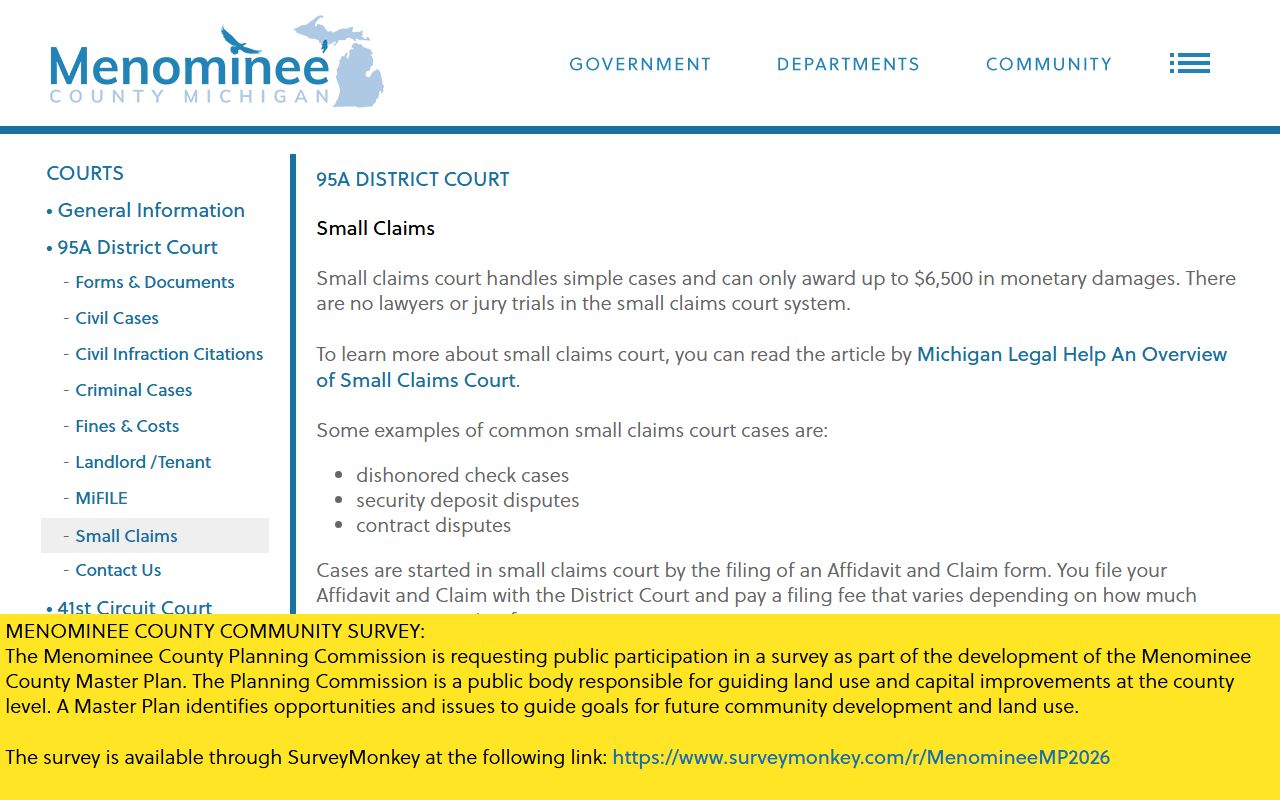
Seeing how the district court organizes small claims makes clear that traffic tickets are one part of a limited-jurisdiction court that keeps many kinds of Menominee County records under one roof.
Types of Traffic Cases in Menominee County Records
Traffic entries in the district court range from routine speeding tickets to serious civil infractions carrying much higher costs. The categories below reflect the violations the court lists on its fine schedule and in its citation guidance.
- Moving violations - speeding tiers, careless driving, disobeying a stop sign or signal, following too closely, and improper lane use.
- Equipment and registration - defective equipment, which can be waived after a documented repair, and expired or missing plate registration.
- Occupant safety - seatbelt and child restraint violations that carry set civil-infraction costs.
- High-cost infractions - failing to yield to an emergency vehicle, failing to stop for a school bus, and operating while texting.
- Criminal traffic - drunk or drugged driving allegations, which are prosecuted as criminal cases rather than paid as civil infractions.
Points are not part of this list because they belong to a driver's state record rather than the court file. The district court states that points are a Michigan Secretary of State function, a distinction that matters when a driver decides whether to pay a ticket or contest it.
What Menominee County Traffic Court Records Show
A traffic case file is built to identify the citation, track the driver's response, and record how the matter ended. The field guide below summarizes what a Menominee County traffic court record typically holds, drawn from the court's citation and fines guidance.
| Field | What It Shows |
|---|---|
| Citation Number | The unique number the officer wrote on the ticket, used to pull the case and to post payments. |
| Charge / Violation | The specific infraction, such as speeding within a stated range or disobeying a signal. |
| Response and Hearing | Whether the driver paid, admitted responsibility, or requested an informal or formal hearing. |
| Determination or Default | The magistrate or judge finding, or a default entered when no timely response was filed. |
| Fines and Costs | The amount assessed under the schedule, plus any late penalty that has been added. |
| Payment Status | Paid in full, on a payment plan, or outstanding, along with the current case status. |
Because Michigan keeps document images offline, these fields represent the case summary a searcher will normally see, while copies of the actual paperwork are obtained from the clerk.
Citation Number vs Name Lookup in Menominee County
The citation number is the most precise way to find a single ticket. It ties directly to one case, avoids confusion between drivers who share a name, and is the value the court asks for when posting a payment. Copy it exactly from the front of the ticket, since a transposed digit will return no match or the wrong file.
A name and date of birth search is the fallback when the citation is lost or when a driver wants to see every open matter at once. The tradeoff is that common names can return several results, so the date of birth and the court name become the filters that confirm the right case, and calling the Clerk's Office with whatever detail is available is often faster than guessing among near matches.
Menominee County Citation Lookup and Payment Details
The court accepts payment in person, by mail, online, or by phone. Online and phone payments run through the AllPaid, also branded GovPay, service, using the traffic pay location code 6789. The phone payment line is 1-888-604-7888, service fees apply, and mailed checks or money orders are made payable to the 95A District Court with the payer's phone number included so the clerk can match the payment. To resolve a ticket by paying it, a driver admits responsibility by signing the back of the citation next to the charge before mailing or delivering it.
The fields the court expects for a citation lookup or payment are listed below, so a driver can confirm each one before starting.
| Field | Type | Required | Notes / Format |
|---|---|---|---|
| Citation number | Text | Yes | Include the case or citation number with any payment or search. |
| Name | Text | Yes | Full name of the driver on the citation. |
| Date of birth | Date | Yes | Required to confirm identity for a payment. |
| Pay location code | Numeric | Yes online or by phone | Traffic and citation code 6789 in the AllPaid system. |
| Phone number | Text | Yes for mailed payment | Include a phone number so the court can reach the payer. |
| Admit-responsibility signature | Signature | If paying by mail or in person | Sign the back of the citation next to the appropriate charge. |
The online portal is the same one the county links for district court balances, and a direct view of the AllPaid payment portal shows the fields a driver completes to post a citation payment.
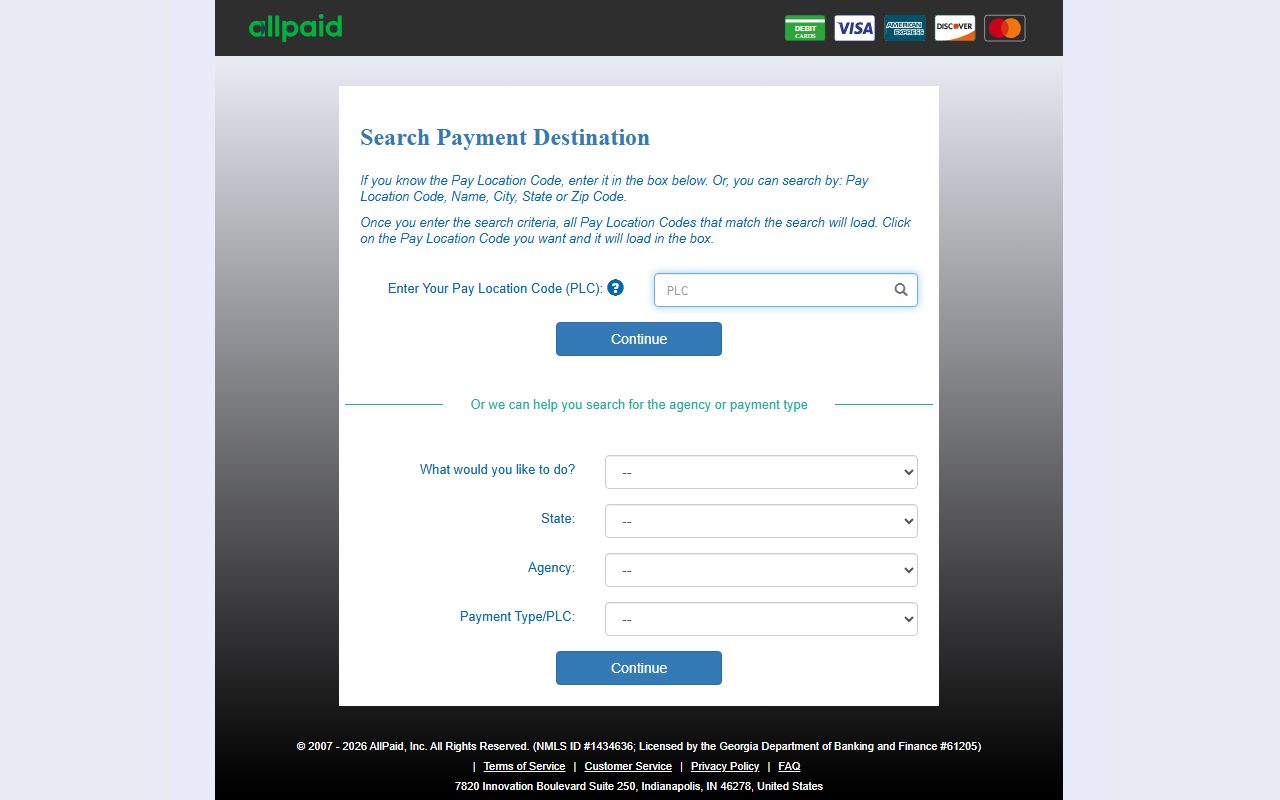
Using the AllPaid portal with code 6789 keeps a Menominee County traffic payment tied to the correct citation, which is why the court asks for the citation number and date of birth at checkout.
Note: Service fees apply to online and phone payments through AllPaid, and a driver who cannot pay in full because of financial hardship should contact the court to ask about a payment alternative rather than let the ticket default.
How to Pay or Contest a Menominee County Traffic Ticket
Every citation runs on deadlines that the court prints on the ticket, and missing them changes the outcome. A driver must respond within 10 days from the date the ticket was issued, and any hearing request has to reach the court within 14 days of that date. If more than 28 days have passed, the license may already be suspended and extra costs added, so the court asks that the driver make contact immediately.
Deadline warning: Respond within 10 days, request a hearing within 14 days, and contact the court right away if 28 days have passed, because a license suspension and added costs may already be in place.
The steps below map the choices a driver has after receiving a citation.
- Read the front and back of the citation and note the response and hearing deadlines.
- To accept responsibility, sign the citation and pay in person, by mail, online, or by phone.
- To challenge the ticket, notify the court in person, in writing, or by phone and deny responsibility.
- State whether an informal or a formal hearing is wanted, and list any unavailable dates.
- Give a current mailing address for notice if it differs from the one on the citation.
A driver who contests a ticket chooses between two hearing types. An informal hearing is held before a district court magistrate with the officer, the driver, and any witnesses present, but without a prosecutor or defense attorney, and its determination can be appealed to a formal hearing. A formal hearing is held before a district court judge, the prosecutor takes part, and the driver may be represented by an attorney.
The court's fines and costs page explains how payment at assessment, payment plans, and late penalties work together. A direct look at the 95A District Court fines and costs page shows the information the court needs when money changes hands.
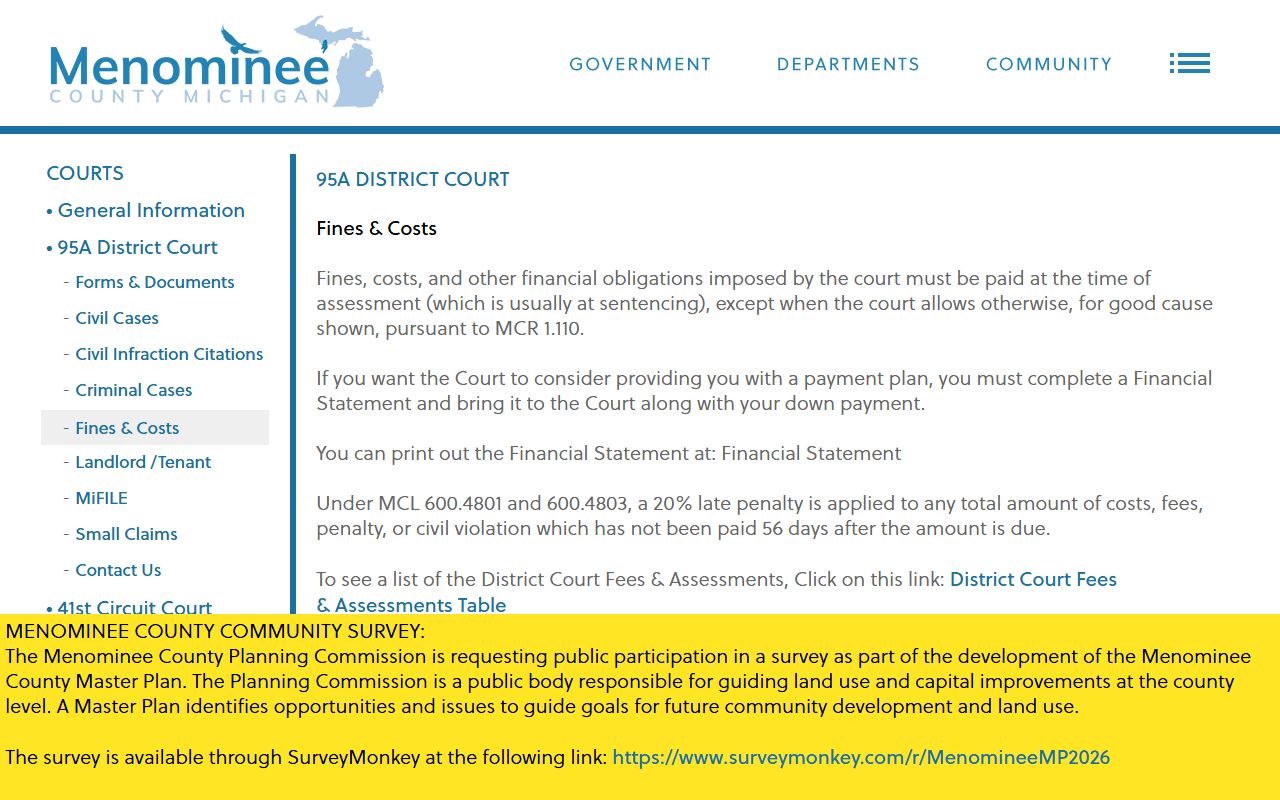
Reviewing the fines and costs page before a deadline helps a driver decide whether paying, requesting a hearing, or asking for a payment plan is the better response to a Menominee County traffic ticket.
Menominee County Traffic Fine Schedule
The district court publishes set costs for common civil infractions, which lets a driver see the amount before deciding how to respond. The figures below come from the court's civil infraction fine schedule.
| Violation | Fine / Costs |
|---|---|
| Speeding 1-5 mph over | $120 |
| Speeding 6-10 mph over | $130 |
| Speeding 11-15 mph over | $155 |
| Speeding 16-20 mph over | $190 |
| Speeding 21+ mph over | $210 |
| Careless driving | $165 |
| Child restraint violation | $65 |
| Disobey stop sign or light, fail to yield, improper lane, follow too closely | $140 |
| Fail to yield to emergency vehicle | $510 |
| Operating while texting | $210 |
| Fail to stop for school bus | $310 |
| Refuse preliminary breath test | $210 |
| Expired or no plate registration | $150 |
| Seatbelt, driver or passenger | $65 |
| Minor in possession, marijuana, first offense | $100 |
| Defective equipment | $120, waived if fixed and signoff returned within 10 days |
| No proof of insurance | $140, reduced to $25 with proof valid at the stop within 10 days |
Two lines on the schedule reward quick action. A defective equipment ticket is waived when the repair is made and a law-enforcement signoff is returned within 10 days, and a no-proof-of-insurance charge drops from $140 to $25 when the driver shows proof that was valid at the time of the stop within the same window.
Court Traffic Record vs State Driver Record
Drivers often assume one office holds everything about a ticket, but a traffic matter usually leaves three separate trails. The court file, the state driving history, and the crash report are kept by different agencies, accessed different ways, and corrected through different processes.
Court Traffic Record
Source: the 95A District Court. What it holds: the citation, charge, hearing request, determination or default, fines and costs, payment, and case status. Where to access: MiCOURT case information and the district court clerk. How to correct: raise an error with the clerk or through the hearing process while the case is active.
State Driver Record
Source: the Michigan Secretary of State. What it holds: license status, convictions, points, and suspensions. Where to access: the Secretary of State driver record channels. How to correct: the district court states that points are not a court function, so point and license questions go to the Secretary of State.
Crash Report
Source: the law-enforcement agency that responded. What it holds: the officer's account of a collision, separate from any citation case. Where to access: purchased online through LexisNexis. How to correct: contact the investigating agency about the report content.
The Sheriff's Office directs the public to buy traffic crash reports through a LexisNexis portal using the incident report number or the name and date of the accident. A direct view of the LexisNexis crash report portal shows the inputs the search requires.
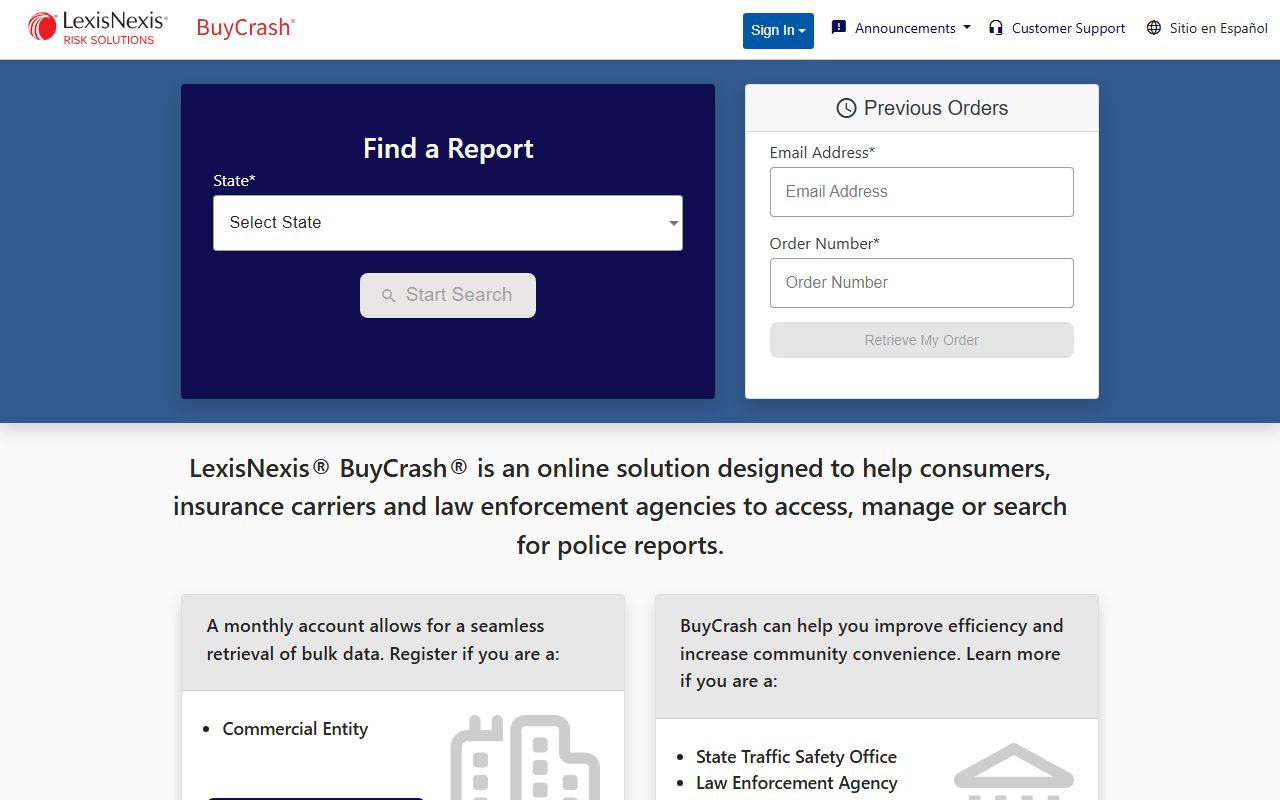
Because a crash report is a police record rather than a court case, buying it from LexisNexis is a separate step from looking up a Menominee County traffic citation in the district court.
DUI and OWI Cases in Menominee County
Operating while intoxicated and operating while impaired are criminal charges, not civil infractions, so they are not resolved by paying a citation. These cases move through the district court's criminal process, which begins with a complaint and can lead to arraignment, bond, and later proceedings, and they carry consequences well beyond a set fine.
For how these charges are filed, tracked, and disposed, see the guidance on Menominee County criminal court records, which covers the criminal side of the same district court.
Deferred Options and Defensive Driving
Some drivers ask whether a local deferral or a defensive driving course can keep a ticket off their record. The county's published traffic guidance does not document a specific local deferral program or a course that dismisses a citation, so the reliable step is to ask the court directly about any option that applies to a given charge. Where a set cost applies, the fine schedule and the hearing process are the documented ways to resolve a ticket, and the magistrate or judge is the right authority to confirm what alternatives, if any, exist for a particular case.
Note: Rather than relying on assumptions about deferral or driving-course credit, confirm current options with the 95A District Court before a citation deadline passes.
Setting Aside Menominee County Traffic Records
Michigan allows eligible convictions to be set aside, which limits public access to the court record. Traffic offenses receive special treatment under a dedicated subsection, MCL 780.621c, within the broader set-aside statute, and an order setting aside a traffic offense does not necessarily remove the conviction from driver-record consequences the way it clears the court file. A driver considering this route first confirms whether the case was in the 95A District Court, then follows the statutory process for the court of conviction.
The set-aside framework and its waiting periods are laid out in state law. The text of MCL 780.621 governs applications to set aside eligible convictions and is the starting point for understanding traffic-offense eligibility.
Public Access and Copy Fees for Menominee County Traffic Records
Traffic case information is generally public, but Michigan court rules shape how much a person can see online. Under the state records framework, courts are prohibited from providing public access to document images through the internet, so a MiCOURT result shows the case summary while the underlying paperwork is reviewed at a courthouse terminal or requested from the clerk. Copy and certification fees are set through the court, and a driver who needs a certified copy should confirm the current amount with the Clerk's Office rather than assume a figure.
The district court also links the state-approved forms used for hearings and other filings. A direct view of the 95A District Court forms and documents page shows where those forms live.
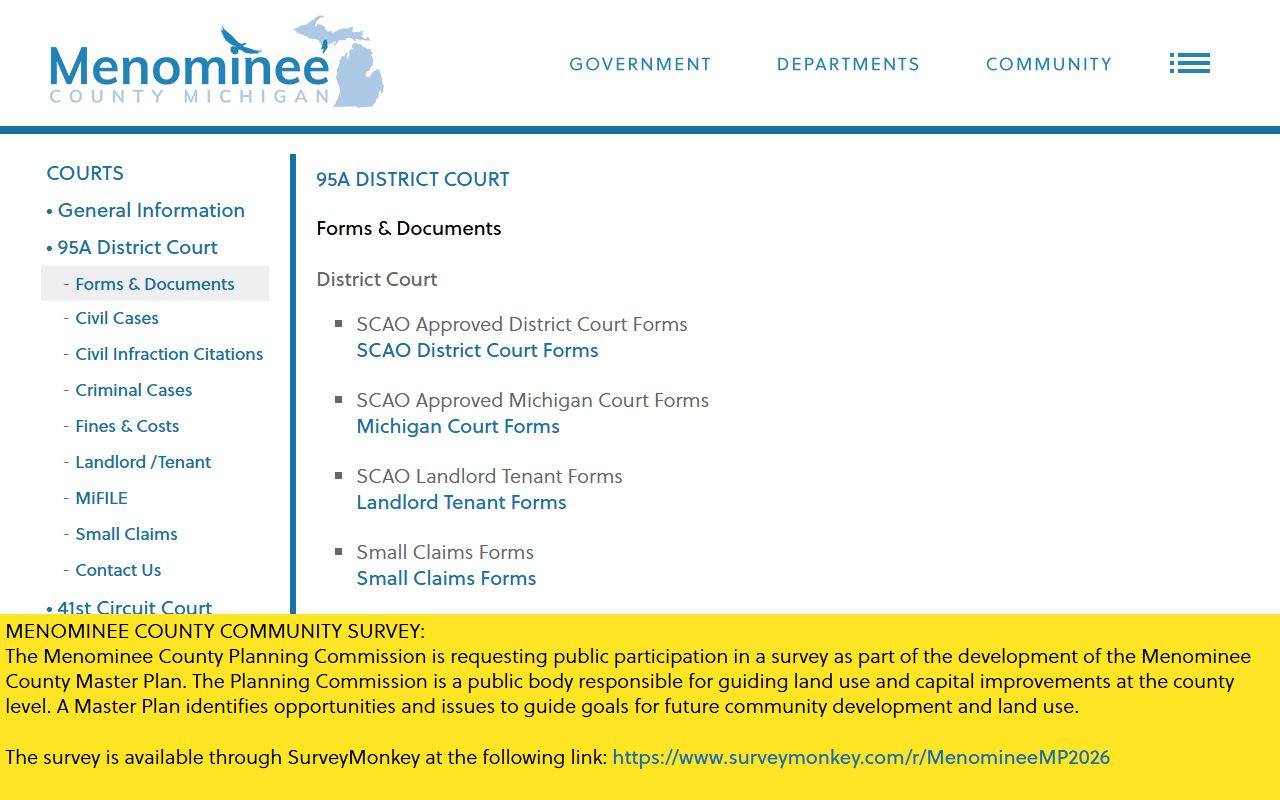
Starting from the court's forms page helps a driver find the right document before requesting copies or a hearing tied to a Menominee County traffic record. For a broader view of access rules that apply across every court unit, the overview of Menominee County court records ties these standards together.
Note: Public access does not override sealed cases or protected personal identifiers, so some details may be redacted even when a citation number is visible online.